
Physical Education
Courses offered:
GCSE Physical Education OR Cambridge Nationals in Sports Studies (to be decided by the school)
GCSE Physical Education
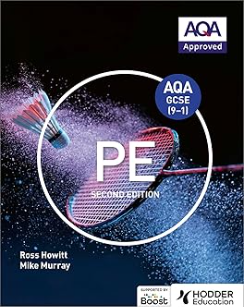
Course Information
| Literacy |  |
|---|---|
| Numeracy | |
| Communications |  |
| Creativity | |
| Practical | |
| Group Work |  |
| Examination Assessment | 60% |
| Non-Examination Assessment | 40% |
| EBacc | No |
| Examination Board | AQA |
| Course | GCSE |
Courses offered:
GCSE Physical Education OR Cambridge Nationals in Sports Studies (to be decided by the school)
GCSE Physical Education
General Information
Video Transcript
00:00:02
Hello, Mr Andrews here, Head of PE at Swanmore College and I'm going to speak to you about the AQA GCSE PE course that students can study in years 10 and 11.
00:00:17
The course is set up in the following way: two written exams, a practical performance and coursework.
00:00:25
Students will have three lessons a week of GCSE PE, and each of these will be covered in these lessons.
00:00:33
In this slide, you can see the breakdown of each of these areas.
00:00:45
The theory aspect of the course is assessed in a written exam at the end of year 11 in the form of paper one and paper two.
00:00:54
Both last one hour and 15 minutes.
00:00:57
Here you can see the topics that students will study.
00:01:14
In the practical aspect of the course, students are expected to perform in three sports: one team sport, one individual sport, and one team or individual sport.
00:01:29
Students will cover some other sports in GCSEPE practical lessons.
00:01:34
Some can be included in clubs and fixtures after school and also what is taken part in outside of school.
00:01:45
Video evidence will be needed as part of the assessment process.
00:01:50
Students can only choose to be assessed in the sports that are on the AQA GCSEPE specification list.
00:01:56
Here you can see a list of sports available to be assessed in.
00:02:09
Here you can see how each sport is assessed in GCSE PE.
00:02:13
Part one requires a skills element to be assessed, and part two is assessed in an area called full context.
00:02:29
The written coursework element of this course involves an analysis of performance task.
00:02:34
It will be marked out to 25 marks and will be word processed by students.
00:02:40
You can see on this slide how it is broken down.
00:02:54
Here are some frequently asked questions.
00:03:07
It is also important here to realise that students will need to bring their PE kit for practical lessons in this subject.
00:03:22
To prepare for this course you can speak to anybody already studying the GCSE PE course.
00:03:29
You can get an idea of how they find the subject.
00:03:32
You can speak to any member of the PE staff.
00:03:35
You need to continue to play sport and exercise on a regular basis to keep a good level of skills and fitness.
00:03:43
You can also have a look at the AQA Physical Education website to read out more information on the course.
00:03:49
You can see a link there
00:03:50
at the bottom of this slide.
00:03:59
This course can lead to many future courses or pathways.
00:04:04
The following are possible future courses or careers students can lead onto with an academic PE qualification.
00:04:12
A or AS level PE at sixth form, university courses in physiotherapy, sports science, sports massage, coaching, teaching, analysis of sport, medical professions,
00:04:24
sports psychology, dietitian, personal training, and sports journalism.
During the course, GCSE lessons will be divided into theory and practical lessons. In the theory lessons, pupils will be introduced to concepts including sports psychology, applied anatomy and physiology, biomechanics and sports performance data analysis. Pupils will be taught these concepts through both their theory lessons and practical activities. Pupils will be covering different practical sports during Year 10 and their teacher will be observing and assessing them as performers continually over the year. The sports will be revisited in Year 11 to confirm practical grades.
What will I need to succeed?
- Pupils must be regular and accomplished sports people, with a good record of participation at Key Stage 3 and extra-curricular, and must be involved in competitive sport
- Pupils must be a good standard in at least one team sport and one individual sport
- Pupils will need to be competent in subjects such as English, Science and Maths due to the in depth topics being covered
- Pupils should have a love of sport and keep regularly updated on global sports issues
Expected Subject Content
The subject content will include both theory and practical sessions. The structure of the curriculum includes the following areas:
Theory (60% of the final grade)
- Fitness and body systems including structure and functions of the skeleton, the respiratory system, energy systems and planes and axes of movement.
- Physical training including the relationship between health and fitness, components of fitness, the principles of training and the long term adaptations to exercise.
- Use of data including data analysis, data collection, data interpretation and evaluation of statistical data.
- Health, fitness and well-being including physical, social and emotional health within sport, the impact of fitness, diet/nutrition and the impact of exercise on lifestyle.
- Sport psychology including classification of skill and skill learning, SMART targets to improve performance, guidance and feedback and mental preparation.
- Socio-cultural influences including engagement patterns of different social groups, commercialisation of sport, data analysis of groups and ethical issues in sport.
Practical (40% of the final grade)
Pupils will be assessed in three activities in the role of performer in the following elements:
- applying appropriate technique(s);
- applying appropriate decision making skills, strategies and tactics;
- demonstrating ideas and problem solving solutions in spontaneous and pre-determined ways whilst under pressure;
- demonstrating appropriate levels of physical ability (e.g. coordination) and fitness;
- demonstrating their ability to control physiological and psychological parameters (e.g. aggression) to facilitate successful performance;
- adhering to ‘rules’, health and safety guidelines, and considering appropriate risk management strategies;
- analysing and evaluating performance to bring about personal improvement.
Expected Assessment Requirements (1-9 Grades)
The assessment will be split between a practical assessment and two written theory examinations (two papers lasting 1 hour 15 minutes each) at the end of Year 11.
The written theory examination will contribute 60% towards the final grade. The two exams will incorporate the various topics that are covered over 15 units of study in Years 10 and 11. Each paper is worth 78 marks. The papers include multiple choice, short answer questions, data analysis tasks and two long answer questions each.
The practical assessment is scored out of 100 marks. Pupils will put forward three sport assessments and one piece of coursework. Each sport is assessed on a pupil’s skill level (scored out of 10) and their ability to use skill/techniques/tactics in game contexts (scored out of 15 marks). The coursework is in the form of an analysis and is worth 25 marks.
Exam Question
A 9 mark question equating to 11.5% of the overall grade of each paper.
The expectation of the question is to analyse or evaluate, and a pupil should spend approximately 10-15 minutes answering this question.
Example question:
Neil is a 52-year-old athlete who has had to overcome knee injuries in his long career.
He is due to compete in the over 50s triple jump world championships.
Evaluate the appropriateness of plyometric training for Neil.
Career Pathways
This course can lead on to studying Physical Education subjects at college, normally in the form of A levels. This can then allow you to move onto University and study specific areas within sport at a degree level.
Possible careers within this route include sports scientists, sports biomechanics, PE teaching and lecturing, sports psychologists, sports medicine, data analysts, and performance analysts.
Cambridge Nationals in Sports Studies
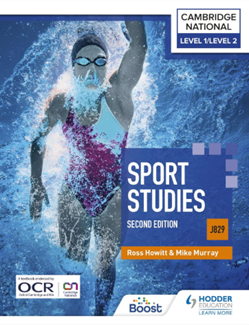
Course Information
| Literacy | |
|---|---|
| Numeracy | |
| Communications | |
| Creativity | |
| Practical | |
| Group Work | |
| Examination Assessment | 40% |
| Non-Examination Assessment | 60% |
| EBacc | No |
| Examination Board | OCR |
| Course | Cambridge Nationals |
OCR Cambridge Nationals Sports Studies Level 1/2
General Information
Video Transcript
00:00:03
The other course we offer at Year 10 and Year 11 is our Cambridge Nationals Sports Studies course.
00:00:12
This course is made-up predominantly of coursework and practical with an exam that pupils must sit at the end of Year 11.
00:00:22
This course runs parallel to our GCSE PE course and as you can see from the diagram, pupils are still able to study a sport or PE course at college should they undergo this course at Swanmore College.
00:00:40
The course includes four units as shown on the slide.
00:00:44
We must deliver the two compulsory units and we also choose to deliver the outdoor and adventurous activities unit.
00:00:58
The Contemporary Issues in Sport unit is delivered in Year 11 as pupils will sit this exam at the end of that academic year.
00:01:06
The exam is an hour and 15 minutes long, worth 70 marks, consisting of a whole host of topics that provide an overview of sport and physical activity inside and outside of the UK.
00:01:19
This unit is worth 40% of the overall pupil's grade.
00:01:29
The Performance and Leadership Unit is delivered across Year 10 and Year 11.
00:01:34
This is a mixture of coursework and practical ability.
00:01:37
Pupils are required to participate in a variety of sports and provide an improvement plan on their performance.
00:01:45
Additionally, pupils are required to create a session plan, deliver a session, and then evaluate their performance as a leader.
00:01:54
This unit is also worth 40% of the overall pupils grade.
00:02:04
The last unit we deliver is our Outdoor and Adventurous Activities unit.
00:02:08
This unit is delivered in Year 10 and gives pupils the opportunity to be exposed to outdoor and adventurous activities.
00:02:17
Pupils will complete a small volume of coursework which is supported by a practical performance in an outdoor or adventurous activity.
00:02:25
We normally take pupils offsite to complete a climbing or abseiling session, but this is subject to change dependent on availability, cost and other factors.
00:02:37
That rounds off our Cambridge National Sports Studies course.
00:02:40
If you have any further questions, please don't hesitate to contact the PE department.
00:02:44
Equally, if a child would like to know more, then please pop in by the PE office and we'll be more than happy to answer any questions that you have.
00:02:53
As a department, we will also be available in the Year 9 options evening, which is coming up shortly.
00:03:00
Thank you for taking your time to listen to what courses in PE we offer Years 10 and Year 11.
The Cambridge Nationals Sport Studies takes a more sector-based focus, whilst also encompassing some core sport/Physical Education themes. It is a practical/hands on qualification, and has a larger coursework focus, with a lesser focus on final exams. Pupils will have the opportunity to apply theoretical knowledge about different types of sport and physical activity, skills development and sports leadership to their own practical performance. They will learn about contemporary issues in sport such as funding, participation, ethics and role models, and major sporting events. Pupils will develop an appreciation of the importance of sport locally and nationally, different ways of being involved in sport and how this shapes the sports industry.
What will I need to succeed?
- Pupils must have a good record of participation at Key Stage 3 and extra-curricular, and must be involved in competitive sport.
- Pupils should have a love of sport and keep regularly updated on global sports issues as these are regularly discussed in lessons
- Pupils must be determined and resilient, as the course contains 60% coursework
Expected Subject Content
This course is divided into three units:
- Contemporary Issues in Sport (Exam)
- Performance and Leadership in Sport Activities (Coursework + Practical)
- Increasing Awareness of Outdoor and Adventurous Activities (Coursework + Practical)
Contemporary Issues in Sport – Theoretical Examination (40% of the final grade)
This test will be based on a theoretical unit on the topics of contemporary issues in sport (R184). This unit will be taught in lessons throughout Year 11, with the exam being sat at the end of the year, lasting 1 hour and 15 minutes. Pupils will undertake regular in class assessments to monitor their progress.
By completing this unit, you will understand a range of topical and contemporary issues in sport, including learning about participation levels and barriers to completing sporting activities. You will also learn how participation is impacted by the promotion of values and ethical behaviour, about the role of high-profile sporting events, the role of national governing bodies and how technology is used in within sport. Topics include:
- Issues which affect participation in sport
- The role of sport in promoting values
- The implications of hosting a major sporting event for a city or country
- The role National Governing Bodies (NGBs) play in the development of their sport
- The use of technology in sport
Coursework + Practical (60% of the final grade)
Pupils will be taught two additional units that all require an element of coursework and practical (R185 and R187). The coursework element of this course involves both theory and practical work. Pupils will develop a portfolio of evidence that is completed over the two years, contributing to their overall course grade.
Performance and Leadership in Sport Activities – In this unit you will have an opportunity to develop your skills both as a performer in two different sporting activities, and as a leader, developing a range of transferable skills. You will work both independently and as part of a team, including communicating with team mates as well as being in front of an audience when you perform. You will perform under pressure, both as a participant and as a leader, and will use your initiative to solve problems and make decisions. Finally, you will deal with rapidly changing conditions and situations. Topics include:
- Key components of performance
- Applying practice methods to support improvement in a sporting activity
- Organising and planning a sports activity session
- Leading a sports activity session
- Reviewing your own performance in planning and leading a sports activity session
Increasing Awareness of Outdoor and Adventurous Activities – In this unit you will understand how to find out information about what opportunities there are in your local area as well as nationally in the UK for all different types of outdoor/adventurous activities. You will learn how to enjoy the activities safely by finding out what equipment, clothing, facilities and technology you need, as well as completing planning to help keep you safe. Topics include:
- Provision for different types of outdoor and adventurous activities in the UK
- Equipment, clothing and safety aspects of participating in outdoor and adventurous activities
- Plan for and be able to participate in an outdoor and adventurous activity
- Evaluate participation in an outdoor and adventurous activity
The course is designed to be as practical as possible and can therefore be assessed through a wide variety of assessment methods, such as giving pupils the opportunity to lead activities in different sports, deliver presentations and act as coaches trying to improve performance.
Expected Assessment Requirements (1-9 Grades)
Pupils will need to complete every module and the relevant coursework linked to it. Pupils will develop a portfolio of evidence which will allow them to complete the course with a Pass (4), Merit (5), Distinction (7) or Distinction* (9). Their portfolio will include coursework which will be completed throughout the two years.
Exam Question
An 8 mark question equating to 11% of the overall grade of the paper.
The expectation of the question is to discuss or explain, and a pupil should spend approximately 10-15 minutes answering this question.
Example question:
The 2024 European Football Championships were hosted in Germany. Discuss the positive and negative long-term impacts of hosting a major sporting event.
Career Pathways
This course can lead on to studying Physical Education subjects at college, with the greatest link coming in the form of Cambridge Technical Sports Studies Level 3, and A level PE. This can then allow you to move onto University and study specific areas within sport at a degree level.
Jobs that can link to Cambridge Nationals include sports marketing, sports advertising, fitness instructors, sports coaches, sports journalism and reporting, sports development, and areas within the sports science industry.