
Design and Technology: Product Design
Course Information
| Literacy |  |
|---|---|
| Numeracy |  |
| Communications | |
| Creativity |  |
| Practical | |
| Group Work | |
| Examination Assessment | 50% |
| Non-Examination Assessment | 50% |
| EBacc | No |
| Examination Board | Edexcel |
| Course | GCSE |
General Information
Video Transcript
Transcript
00:00:00
This PowerPoint is to explain to you about the design and technology exam that you may possibly take at Key Stage 4.
00:00:10
We study the design and technology with timbers specialism, which means that you will have core materials and then you also have a big focus on timbers.
00:00:24
This slide has been put together just to explain to you about
00:00:28
sort of areas you'll be doing.
00:00:32
A little bit about the background.
00:00:33
The key thing is to remember it is very much building upon the things that you've done in product design at Key Stage 3.
00:00:43
The difference being that you are given a problem to solve and then you would lead through designing and creating solutions to the problem yourself and we end up with a wide range of projects being created
00:00:57
So for example, in year 10, you get the opportunity to work with a lighting project, which you decide on the situation you're going to use it, and then model and manufacture that product.
00:01:14
Obviously, you're very keen to understand what you might be studying in this particular subject.
00:01:19
So there is a series of core elements that generally are covered through theory lessons, but not always.
00:01:26
Sometimes we would look at them within a project.
00:01:31
It is quite a detailed set of things that we have to look at, and I've just put some headlines there for you to be able to see what sort of things you might be doing.
00:01:44
There is a section on timbers in the exam paper at the end, but that is taught pretty much through our practical sessions, building upon what you need to know for the course.
00:01:57
A lot of people are very keen to understand how much practical work you will actually do.
00:02:01
So currently we have six lessons over a two week period.
00:02:05
It works out to be about 50% theory and 50% actually practical work.
00:02:12
Now the 50% theory is made-up also not just of
00:02:16
learning facts and figures and content of the course, but it will also be designing and recording information of the particular design project you're doing at any one time.
00:02:26
So when we're doing our theory sessions, we will be sat at tables, but it won't always be working independently.
00:02:35
It might be doing a project with other people.
00:02:37
It might be researching, it might be investigating, it could be designing.
00:02:41
It could be developing, it could be modelling.
00:02:43
So it is not always going to be, as I say, learning facts and figures.
00:02:54
To be successful in this subject area, you really must enjoy designing and manufacturing.
00:03:00
They are our core areas.
00:03:02
The designing, it will involve sketching and creating ideas that you've got in your head in relation to problems that we give you.
00:03:10
So an ability to draw and sketch is quite useful, although we do use computer aided design for
00:03:15
some sketching and creating work as well.
00:03:18
It will build on the work you've done previously in Key Stage 3, so it's important to have enjoyed those particular areas, the projects that you've done and working with a variety of materials.
00:03:28
The difference between this and the engineering is possibly the variety of materials we use and also, as I said, the designing and developing areas.
00:03:37
It's far more creative with a wide range of materials being offered, so it will be more
00:03:45
interesting to people that want to be design creative and not necessarily find out more of the technical issues behind the materials and how they are put together.
00:03:57
In terms of assessment, it is a 50%/50% split.
00:04:02
So there's a 50% NEA, non-examined assessment
00:04:07
and that is like a piece of coursework.
00:04:09
so you would be working on a challenge project that is given to you.
00:04:14
You have to come up with research and investigate the problem and then decide on a solution through sketching and ideas, develop that solution and show quite clearly how it would be made and manufactured and obviously you have to manufacture the product as well.
00:04:31
To test your knowledge of the subject, there is an external exam paper, which is now in three quarters, which is again worth 50% of your mark
00:04:39
and that is split into two elements, the core section and the section of specialism, which is your timbers.
00:04:46
Within the paper, there is a mixture of short answers, exam essay style questions, and drawing and sketching
00:04:54
so there's a big mix of opportunities there for you in an exam paper.
00:05:00
A lot of people say, what can I go on to do?
00:05:03
There is a direct link to an A-level, a product design A-level, which our local colleges offer
00:05:09
so you can do that alongside two other A-level subjects.
00:05:14
Or if you would rather go on to a more practical subject area, there's a lot of vocational courses offered at different levels that this subject would suit.
00:05:26
In terms of a future career,
00:05:28
it is a wide range of careers that could be linked to this subject
00:05:33
and even if you don't want to actually work with your hands in the future, having that design ability, being able to be creative and solve problems can work for you in lots of different areas.
00:05:51
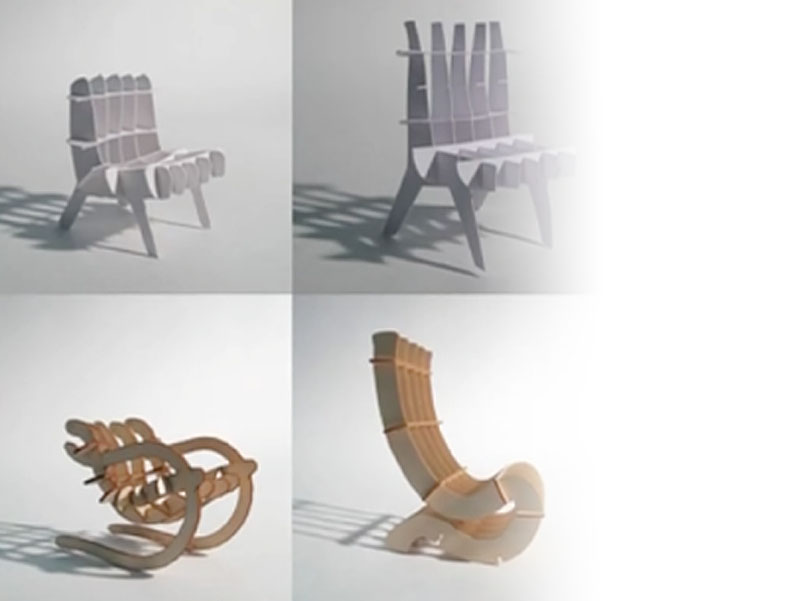
This final slide just explains some of the projects.
00:05:54
I'll show you some of the projects that pupils have done in the past.
00:05:58
They were given a particular design brief to solve
00:06:02
and then they have come up with their own solutions, looked at issues around it and made a decision as to what they wanted to solve.
00:06:09
And you can see they've got a mixed materials being used.
00:06:12
We've got metals, polymers, fabric, et cetera, mixed in with the timber that is the core material being used.
Pupils will gain a broad understanding of the properties of materials and commercial practice in related industries. They will develop practical skills which will enable them to produce practical outcomes manufactured from woods, metals and polymers. They will also cover units on Systems & control, Mechanisms, Papers & Boards and Textiles. Pupils will be expected to apply technical and practical expertise to ensure that a product meets a manufacturing specification and is suitable for its intended purpose. Pupils will also develop valuable transferable skills in teamwork and communication. This course will prepare pupils to participate confidently and successfully in an increasingly technological world. There will be opportunities to apply their knowledge from other disciplines, including Mathematics, Science, Art and Design, Computing and the Humanities. Successful completion of this course could lead to further study of a wide range of courses at A Level, related Level 3 vocational qualifications, or an apprenticeship in a related area of employment. The pupils will build on the skills and knowledge learnt in KS3. This course is a GCSE D&T Qualification with a specialist focus on Timbers.
What will I need to succeed?
Pupils should have an enthusiasm for designing and making. The pupils will build on their Key Stage 3 Design and Technology knowledge. This qualification is intended for pupils who are interested in understanding the working properties of woods, metals and polymers (plastics) and who wish to use these materials in a practical way. It will particularly appeal to pupils who are looking for a course that is practical in nature and will prepare them for further study and employment within related industries.
Expected Subject Content
The course will give pupils the opportunity to develop an understanding of:
- materials and their working properties;
- processes and manufacture;
- joining, components, adhesives and finishes;
- commercial practice;
- developing design ideas, testing and evaluating their work in order to refine their design decisions in developing products which will allow pupils to show their creative flair.
Lesson Structure
Lesson time will be divided between 50% practical project work and 50% theory.
Expected Assessment Requirements
This GCSE will have a practical unit and an externally assessed examination.
GCSE – will be weighted 50% NEA (new term for Controlled Assessment) 50% written examination paper (1-9 Grades).
What careers it can lead to after leaving Swanmore College
Having a qualification in Product Design can lead to many further courses and careers. Examples of the many careers include interior design, prop manufacture, fashion design, graphic design, landscape gardening, and carpenter.